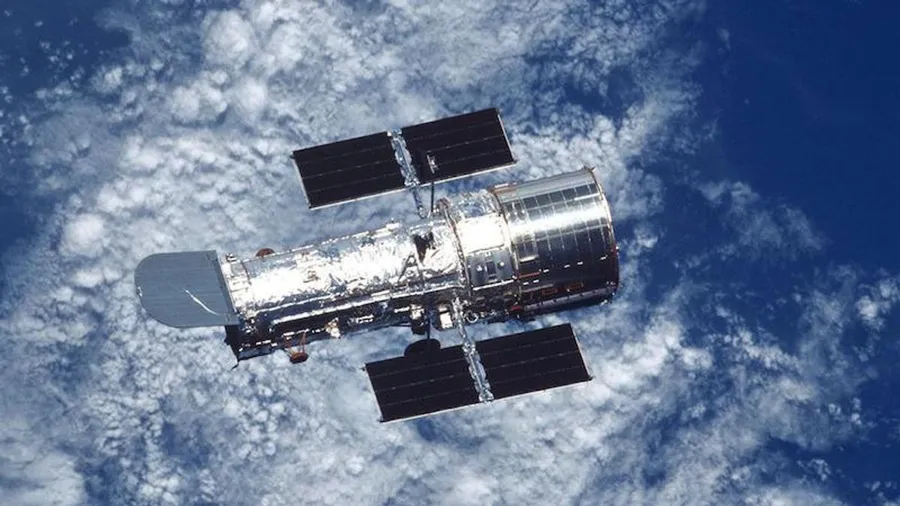
The Hubble Space Telescope was launched into orbit by the Space Shuttle Discovery on April 24, 1990. Hubble orbits at an altitude of about 332 miles above Earth. It is as long as a large school bus and weighs as much as two adult elephants. Hubble travels at a speed of approximately 8 km per second. That is equivalent to traveling from the north of Saudi Arabia to its south in less than 5 minutes!
Hubble captures clear images of objects in the sky such as planets, stars, and galaxies. Hubble has made more than one million observations. These include detailed images of the birth and death of stars, galaxies billions of light-years away, and fragments of comets colliding with Jupiter's atmosphere. Scientists have learned a great deal about the universe through these images, and many of them are truly spectacular.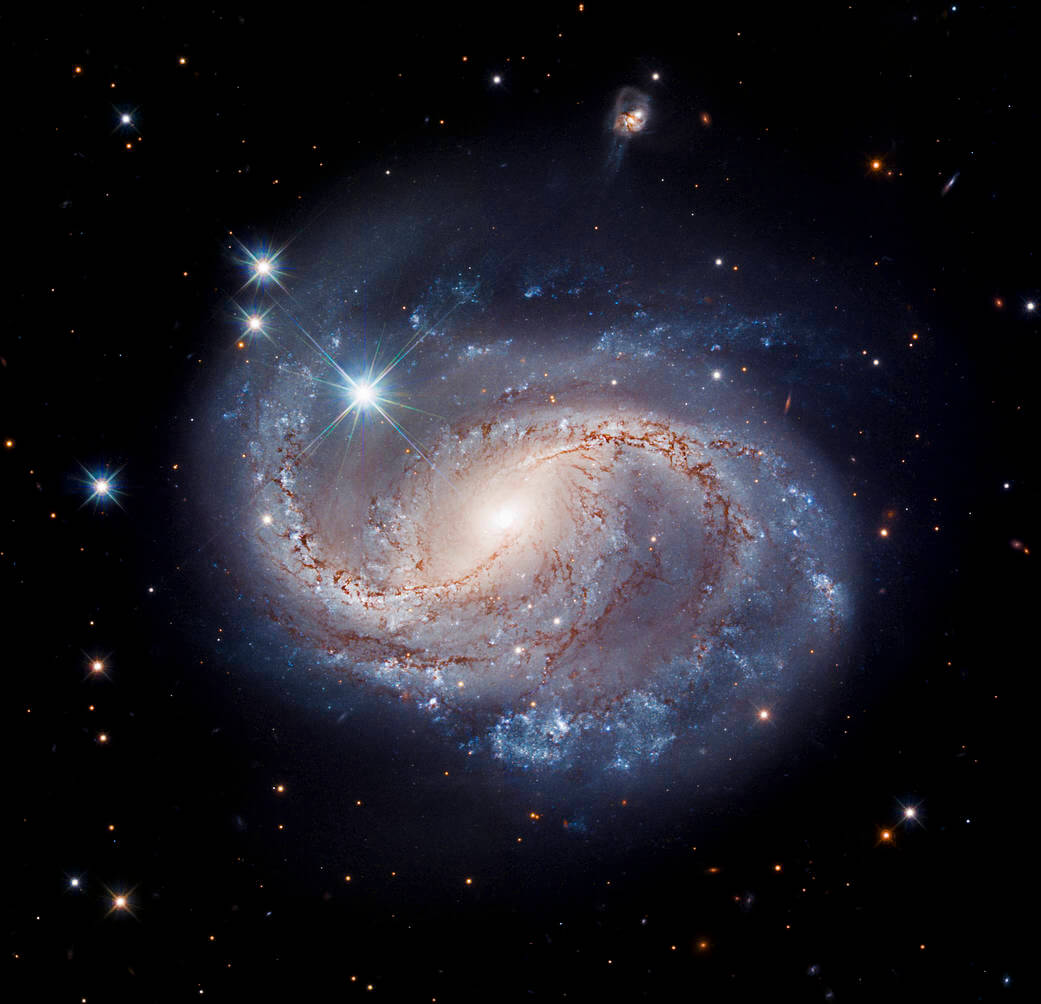
NASA's Hubble Telescope captured this breathtakingly beautiful image! Against a pitch-black background, the blue swirls of spiral galaxy NGC 6956 shine radiantly. Credits: NASA, ESA, and D. Jones (University of California – Santa Cruz).
What Makes Hubble Different from Telescopes on Earth?
The mixture of gases surrounding a planet is called its atmosphere. Earth's atmosphere changes and blocks some light coming from space. Hubble flies and orbits high above the Earth and its atmosphere. Therefore, it can see space more clearly than ground-based telescopes can. Hubble is not a telescope you look through with your eye; it uses a digital camera that captures images like a mobile phone camera. Hubble then uses radio waves to send these images to Earth.
Where Did the Name Hubble Come From?
Hubble was named after the American astronomer Edwin P. Hubble. He made important discoveries in the early twentieth century. He showed that the galaxy containing the solar system – the Milky Way – was just one of many galaxies. His work helped prove that the universe is expanding.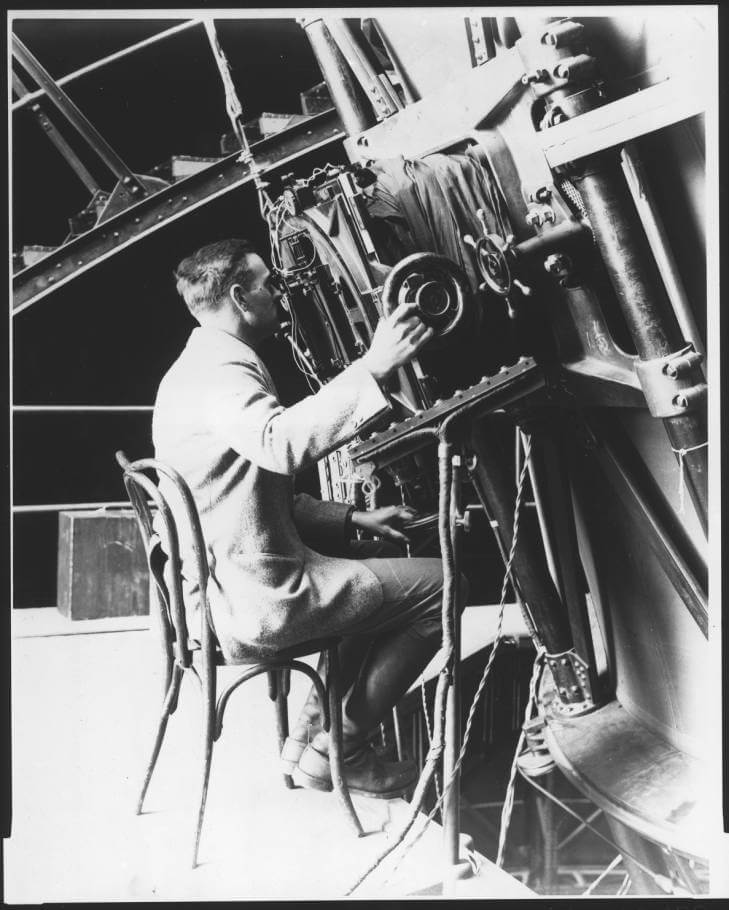
Edwin Hubble at Mount Wilson Observatory in California. Credits: Edwin P. Hubble Papers, The Huntington Library, San Marino, California.
Interested in space and science? The Air Rocket box from BarqBoxes will take you on a journey to outer space!
What Has NASA Learned from the Hubble Space Telescope?
Images captured by Hubble have helped scientists estimate the age and size of the universe; scientists believe the universe is approximately 14 billion years old. Hubble also helped scientists understand how planets and galaxies form. An image known as the "Hubble Ultra Deep Field" shows the farthest galaxies ever seen.
Hubble revealed the existence of black holes that pull everything around them, including light. The telescope also played a key role in the discovery of dark energy — a mysterious force that causes the universe to expand at an accelerating rate over time. It also revealed details of gamma-ray bursts – powerful explosions of energy that occur when massive stars collapse. Hubble has also studied the atmospheres of planets orbiting stars similar to the Sun.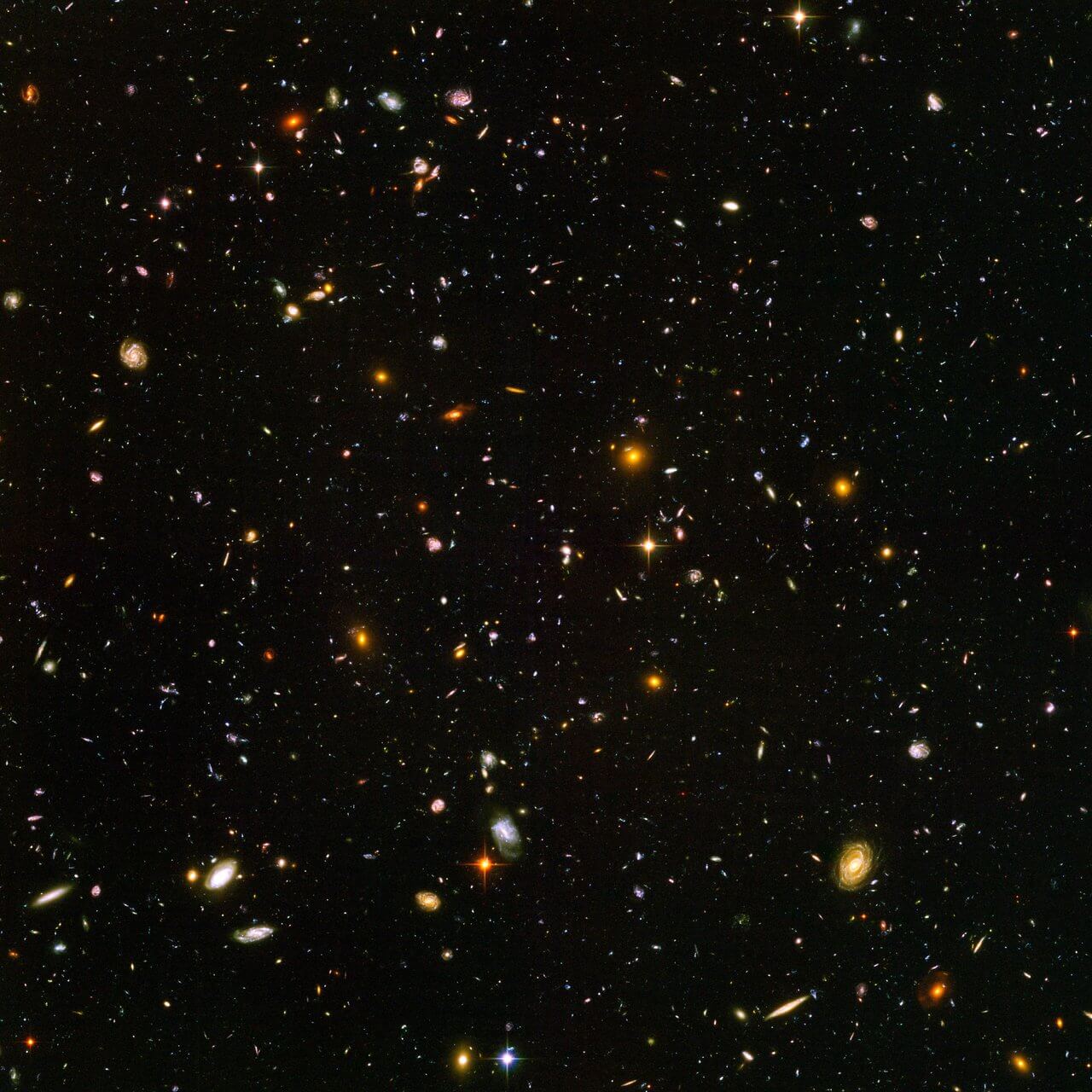
This image, containing nearly 10,000 galaxies, is the deepest visible-light image of the universe, known as the "Hubble Ultra Deep Field" (HUDF) — a galaxy-studded image representing a deep "core sample" of the universe, stretching across billions of light-years. Credits: NASA, ESA, STScI, and the HUDF Team.
Hubble has helped scientists learn more about our solar system. The telescope monitors comets and planets and even discovered moons around Pluto that had never been seen before. Hubble's images help scientists learn more about the entire universe.
Hubble explores the universe 24 hours a day, 7 days a week. This means it has observed some amazing cosmic wonders every single day of the year, including your birthday!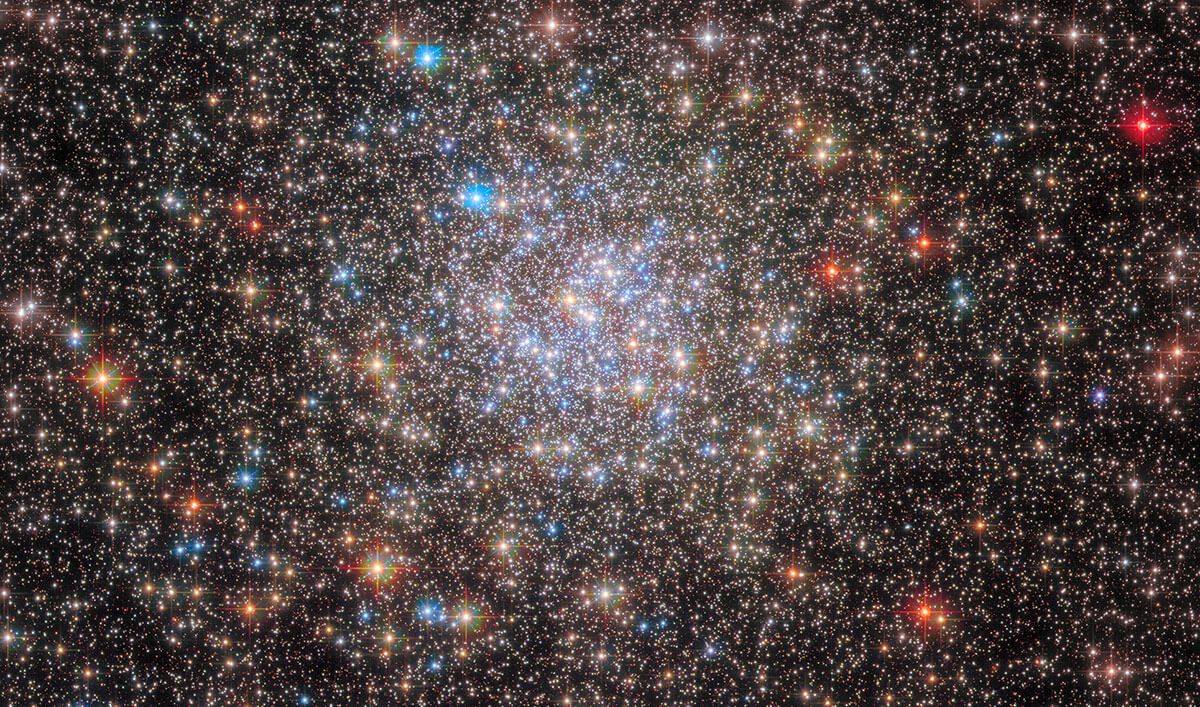
Image of globular cluster NGC 6355, captured by the Hubble Telescope, where stars shine brilliantly. Credits: ESA/Hubble and NASA, E. Noyola, R. Cohen.