Ancient engineers used pulleys thousands of years ago to help build massive structures such as aqueducts, monuments, and even pyramids. Today, we still use pulleys to perform a variety of useful everyday tasks. A pulley is a simple machine that helps us lift heavy objects (a wheel with a groove through which a rope or cable passes). Multiple pulleys are often used together in lifting systems to make lifting significantly easier, because they reduce the pulling force required.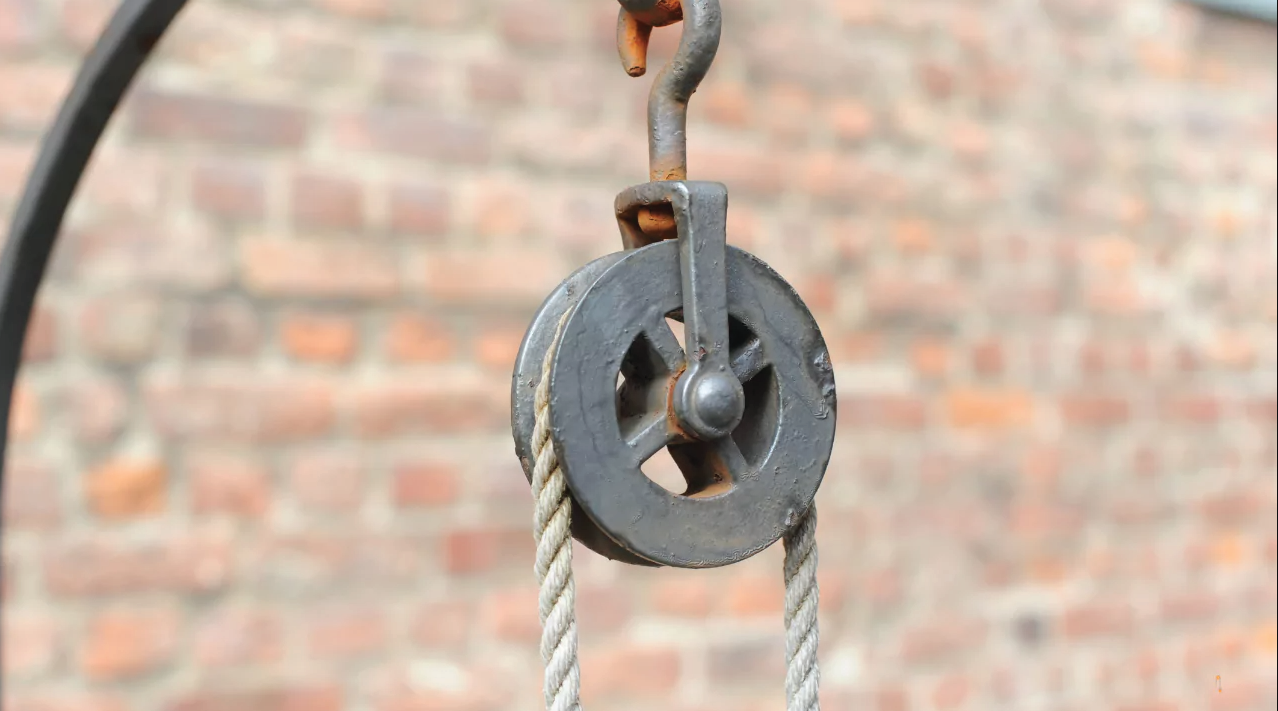
A pulley in its simple form: a wheel with a groove through which a rope or cable passes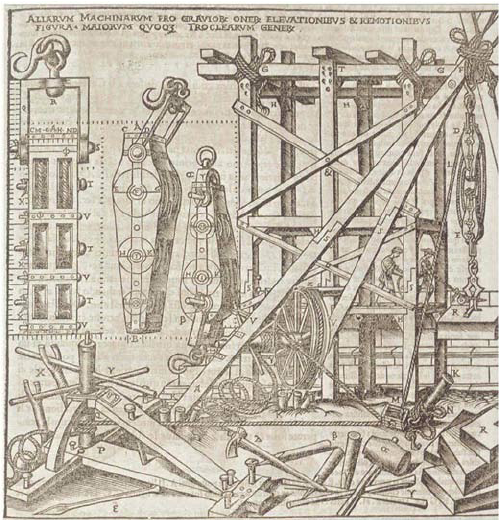
Pulley systems for Roman machines by Vitruvius as revisited by Cesariano in 1521
Pulleys come in different types, each designed for a specific task:
Fixed Pulley
A fixed pulley is one that stays in place, such as being mounted on a ceiling or wall. When a rope is threaded through it, the pulley does not move with the load; it stays in position. Its benefit is changing the direction of force only — when you pull the rope down, the object moves up. This method makes lifting easier in practice, but it does not reduce the weight of the object being lifted.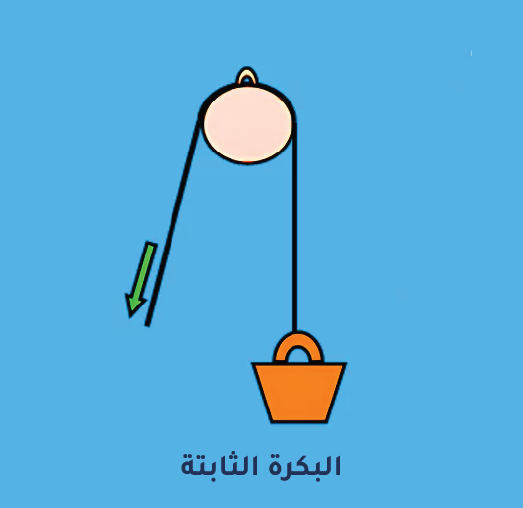
Movable Pulley
A movable pulley has an axle that moves freely. It moves up and down with the object being lifted. This type helps reduce the force a person needs to lift something. When using a movable pulley, the person feels the weight is lighter because the pulley multiplies the effort applied. These pulleys are often used at construction sites or in systems that need to lift heavy objects easily.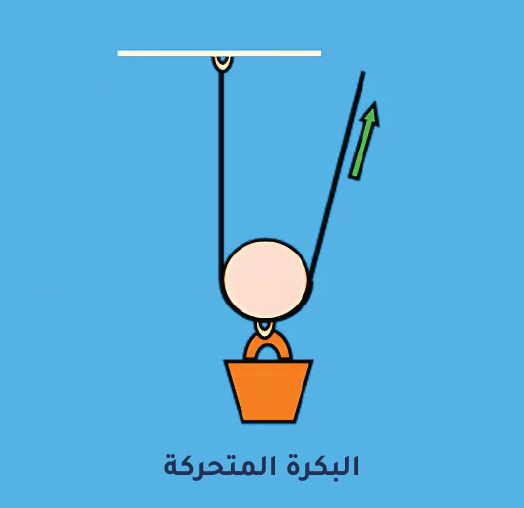
Compound Pulleys
A compound pulley system combines fixed and movable pulleys. By using both types together, you can achieve a greater mechanical advantage, enabling you to lift extremely heavy objects with less effort. The more pulleys in a compound system, the greater the mechanical advantage and the less effort needed.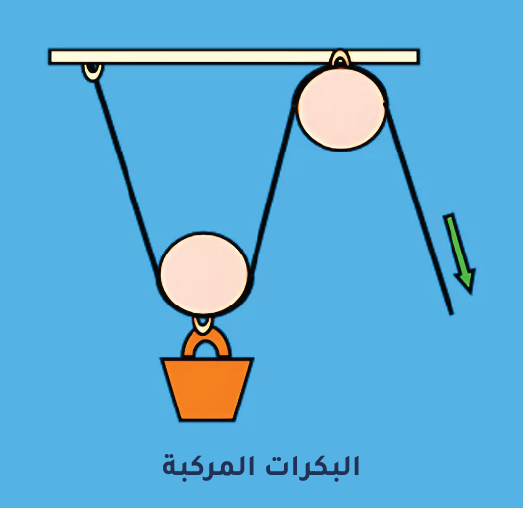
Learn about pulleys up close with this BarqBoxes box, and build a wooden crane using them. You can also modify your crane to make it better and better!
What Is Mechanical Advantage?
Mechanical advantage is a measure that tells us how much "lighter" things feel when using a tool like a pulley, for example.
When we use a fixed pulley, the weight of the object does not decrease, but it helps us change the direction of pulling. In other words, a fixed pulley does not multiply force; it only makes the pulling method easier. (A fixed pulley does not provide mechanical advantage.)
A movable pulley makes lifting easier, as if the weight became half of what it actually is. This means we only need half the force to lift the same weight. (A movable pulley provides mechanical advantage.)
When we use two or more pulleys (a compound pulley), we get greater mechanical advantage. The more pulleys we add, the easier the task becomes and the less effort we need. (A compound pulley provides mechanical advantage.)
For example: If you need 100 newtons of force to lift a box:
-Using only a fixed pulley, you will need 100 newtons.
-Using a movable pulley, you only need 50 newtons.
-Using a compound pulley with 4 pulleys, you may only need 25 newtons!
This is why pulleys are widely used in cranes, elevators, and some toys and devices. But this does not mean that a fixed pulley is not helpful — while it may not reduce the effort needed to lift an object, it helps us change the direction of force. Instead of lifting the load straight up, we can pull the rope downward, which makes the process easier for us. For example, when lifting a bucket of water using a fixed pulley, we pull the rope downward, and the bucket rises upward. This is easier than trying to lift it directly with our hands.

Simple Machines: The Pulley
Pulleys have helped people lift and move objects for over 3,000 years!